
Monday Light Icing Possible

Keeping an eye on the potential for light icing Monday afternoon and evening.

Saturday PM Update:

The going forecast from the previous update still looks pretty accurate. I took a screenshot of the projected freezing rain totals expected according to the computer model which lines up well with what we have been seeing for a couple of days. There has been a little more of Western Kentucky included in the chance of the light icing but other than that, see below for other graphics.

12Z SAT NAM MODEL RUN - FROM EARL BARKER SNOW

Friday PM Update:

For a few days now, computer models have been indicating that cold air will spill into the northern half of the Local 6 area Monday throughout the day before moisture leaves the area. Temperatures will begin in the 40's during the morning then drop to near freezing by mid to late afternoon. Areas in Western Kentucky along the Ohio River north into Southern Illinois and most of Southeast Missouri will most likely see the arrival of this cold air before all of the moisture moves east.

Main impacts will be on elevated surfaces such as trees, windshields, overpasses, and bridges across the area. Ice accumulation appears to be light at .05-.10 in the identified area below.

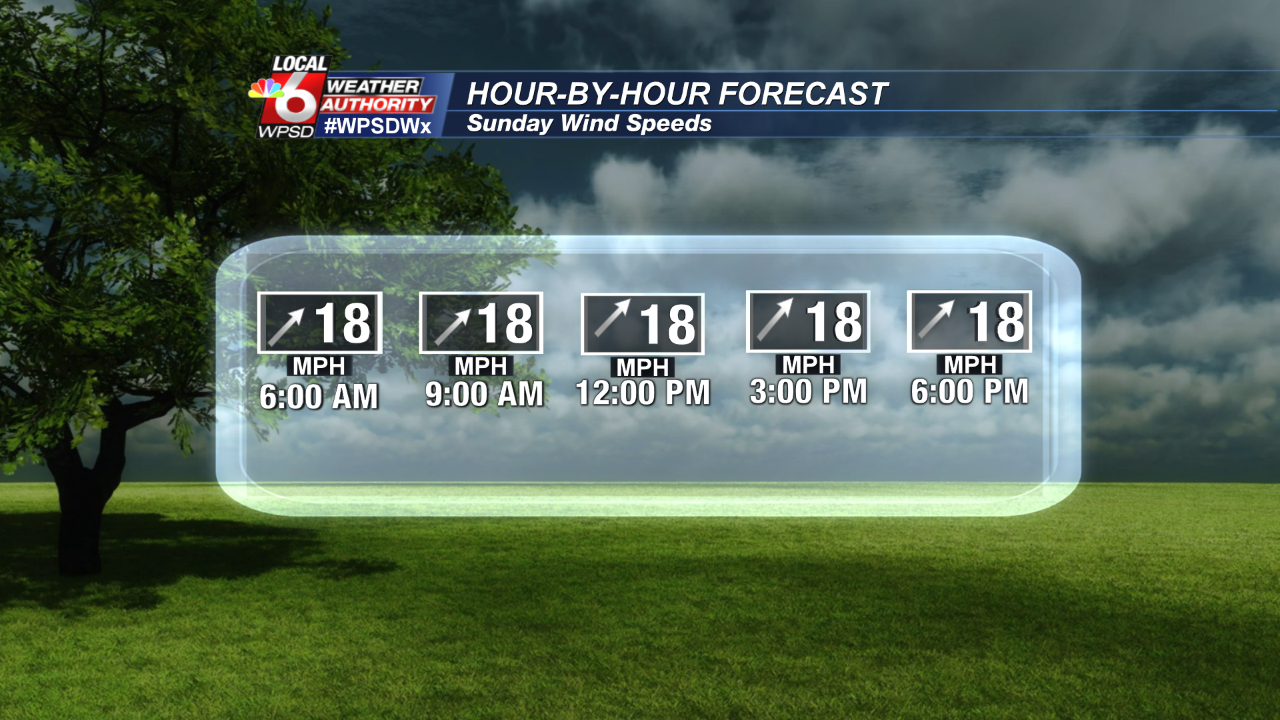
Winds will be a big part of the weather story all weekend long as this cold front approaches and temperatures warm quickly. Winds will ramp up Saturday from the SSW from 10-20 mph and stay elevated into Sunday and Monday until the front passes. Here is a look at the winds hour-by-hour for both Saturday and Sunday. Wind gusts may reach between 25-30mph.

Comments

Popular posts from this blog

Planting Zones Heading North

As our global climate changes, so does our planting zones, helping us determine which flowers/shrubs/trees are hardy in specific areas. The Local 6 area has always been split by 2-3 growing zones so placement becomes very important to those in the agricultural community. The image below represents the average over the past 30 years. Climate Central published the following information:  "What kinds of flowers, shrubs and trees you’ll find at your local nursery depends on your climate — how warm it tends to get in summer, and how cold in winter. A plant that’s happy in Wisconsin might be miserable in Alabama, and vice versa. The U.S. Department of Agriculture has formalized these differences into " hardiness zones " — strips of similar climate that run more or less east-to-west (except in the high mountains), where particular plants should do especially well. But as the planet warms under its thickening blanket of greenhouse gases, those zones are shifting northward. Th...

Round 3 on deck and wrap-up of snow depth thus far

Snow Depth as of December 30, 2012 with additional snow expected New Years Eve night. (Reports from viewers) It is becoming quite clear where the jet stream has set up for the start of winter. People in Southern Illinois and neighboring MO counties along the Mississippi River can barely keep the roads clear while everyone south of the Ohio River is wondering if we'll ever see snow this winter! :) New Year's Eve night is when we are expecting another (although light) snow event across the same areas where you see higher snow depths above. A WINTER WEATHER ADVISORY begins Monday at Noon and continues through Tuesday at 6AM for most of Southern Illinois and SEMO. The latest advisory map is below.  Winter Weather Advisory - Paducah/St. Louis National Weather Service Snow totals are not expected to be significant but with icy snow pack across much of the advisory area, any additional snow/sleet may make for hazardous conditions again for New Year's Eve night and New...

Strong El Nino Impacts for Winter in the Mid-South

Wednesday September 9, 2015 Update: Created by Jennifer Rukavina via NOAA/ESRL Data The current trend will continue as NOAA continues to forecast a strong El Nino episode through late Winter and possibly Spring 2016. The following two graphics show on a map what I have detailed below about "Notable El Nino Episodes for Winter". Winters tend to be warmer than normal and precipitation stays fairly average. The two maps compare the previously mentioned winter El Nino episodes to the long-term average from 1950-2007. Created by Jennifer Rukavina via NOAA/ESRL Data August 21, 2015 Original Post Forecasting into the season ahead is most accurate when looking to similar weather patterns of the past. As you have probably seen in the news El Nino is expected to strengthen into the upcoming fall and winter. I've done a little digging into the historical record to find out how we have fared during similar El Nino episodes. Here is what I was able to fin...